
Mississippi Booking Photos and Busted Records
A Mississippi county booking photo is taken during jail intake, when local law enforcement processes an arrest. The booking record can carry plenty of detail. Names, arresting agency, intake date, charge text, and custody status all appear in some counties. The image records an intake event. Mississippi runs no single statewide feed for county bookings. Each sheriff controls its own public roster, if one exists at all, and local rules decide whether a photo appears. State prison profiles sit elsewhere. They belong to the Mississippi Department of Corrections, a separate layer covering people in state custody. So follow the record holder. The county answers a local booking question. MDOC covers state prison, and the court file holds the case outcome.
Booking means a person was processed. An agency took fingerprints, took a photo, and logged the arrest in its records.
The Mississippi Ethics Commission's Public Records Act page spells out how the law treats photographs within public-body records, exemptions and confidentiality rules included. A photo can still be obtainable. Not every image gets posted online, though. That matters in counties with no roster at all, or a list of names with no images attached.
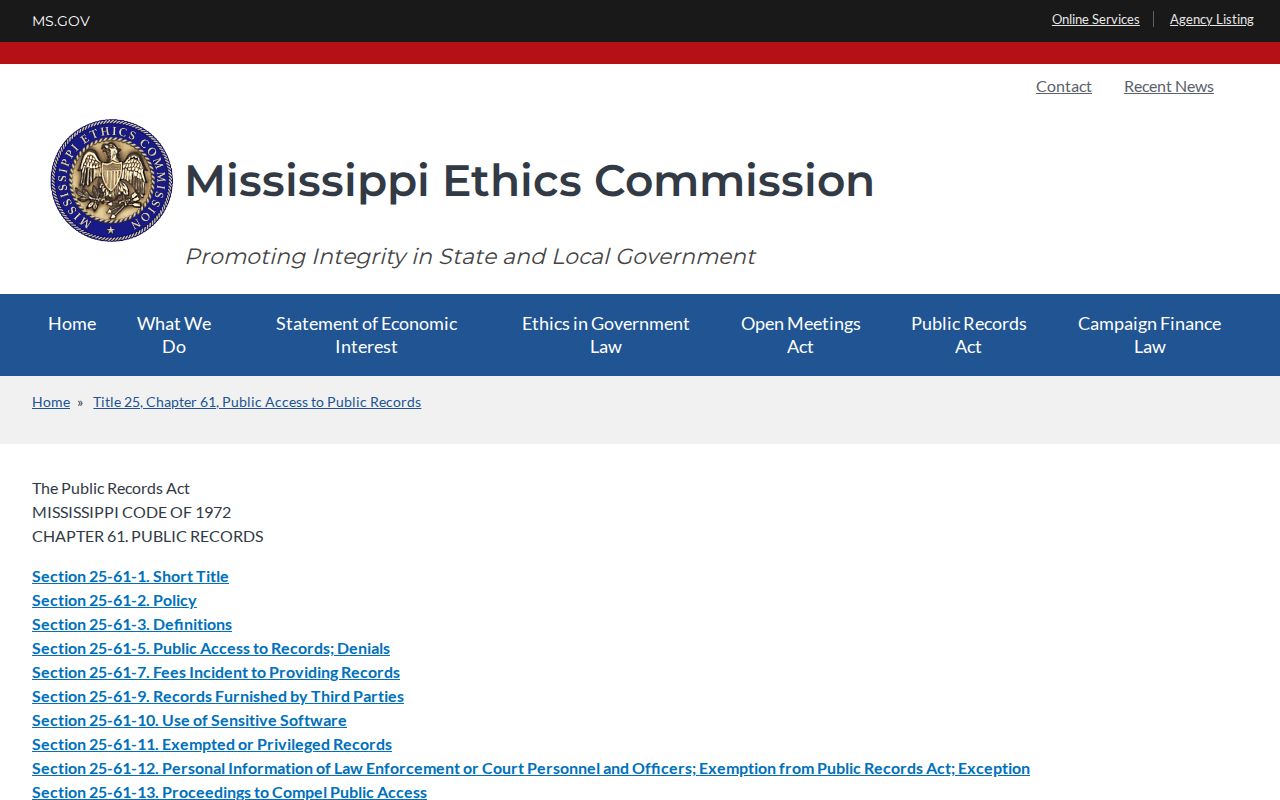
That page sets out access rights and their exceptions. It promises no complete online roster. When a county publishes nothing, a written request to the record custodian is the route.
Mississippi Mugshot Law
The Mississippi Public Records Act, Mississippi Code §§25-61-1 through 25-61-17, sets the general access rule for records used in public business. One provision matters here. Section 25-61-3(b) puts photographs inside the record definition. Section 25-61-5 then gives any person the right to inspect, copy, or reproduce public records. Sections 25-61-11 and 25-61-12 preserve other confidentiality rules and separate public incident reports from investigative ones. Access still has edges. Under Mississippi Code §25-1-109, law enforcement may not release the name of someone arrested for a misdemeanor unless that person has been formally charged and arrested, subject to listed exceptions. Juvenile records face separate limits under the Youth Court Act. That shield is strong. And a third-party repost proves nothing about lawful disclosure. No broad mugshot ban is on the books. Mississippi has no general statute forcing private sites to remove a lawfully obtained photo either. Two bills tried. The proposed 2019 S.B. 2860 and 2022 H.B. 416 both failed, so neither is current law. Statutes and court-ordered relief still take separate analysis.
Mississippi law draws lines. Public access never overrides the misdemeanor identity rule, juvenile confidentiality, or a court order. No general statute forces private publishers to remove every booking photo.
A court can seal or expunge a record. That relief, though, works case by case and touches only official files. Court orders do not wipe out private copies, old news stories, archive scans, or search results that already exist. So the practical picture is layered: public access rules, misdemeanor identity limits, strong juvenile confidentiality, and court-ordered relief each govern a different setting.
Busted Booking Records in Mississippi
A Mississippi jail docket and a county web roster rarely match field for field. The docket required by §19-25-63 is set by statute. It records the prisoner, the warrant or commitment authority, the date received, the arrest or commitment date, the cause, and the release or discharge. A web roster can go further. Some add an image, bond, arresting department, or booking number. Released people may drop off entirely. MDOC's profile is another animal. The state offender search returns it. Expect an MDOC ID, physical descriptors, entry date, unit or location, location-change date, sentence information, a tentative release date, and a profile image. That photo is a corrections profile picture, not a fresh county booking shot. These fields come from documented examples, not one statewide county database.
| Field or search key | County booking or roster | MDOC profile |
|---|---|---|
| Search entry | Name or an alphabetical index on some rosters; current and released views may be separate. | First name, last name, or MDOC ID. |
| Name and ID | Name; booking number where a county provides it. | Name and MDOC ID number. |
| Date and custody | Intake or booking date; current or released view varies by sheriff. | Entry date, location, and location-change date may appear. |
| Arrest details | Arresting department, charge text, and sometimes officer or city. | Sentence and offense details, rather than a new county arrest entry. |
| Release or sentence | Bond and release date may appear on roster or released pages. | Sentence length and tentative release date may appear. |
| Photo | Image may appear on a booking card, a profile page, or not online. | Profile photo when the public search returns one. |
- Booking
- The intake process after an arrest, when an agency records identity and custody details.
- Bond
- A court-set amount or condition that can allow release while a case is pending.
- Disposition
- The court's recorded outcome, such as dismissal, plea, acquittal, or sentence.
- Expungement
- A court-ordered process that clears specified public records under Mississippi law.
- Warrant
- A court order authorizing an arrest or another legal step; it is separate from a jail booking record.
A matching name alone proves nothing. Compare dates and agency details, and rely on official identifiers only when needed and lawful.
Requesting Mississippi Booking Records
Ask the office that made the booking record. Do that when a county roster comes up empty or a photo is missing from a card. Mississippi law allows agencies to charge actual and reasonable costs for copies. The Public Records Act sets the clock. An agency without written procedures must grant access within one working day. Written procedures cannot push a response past seven working days. If the record is not ready by that point, the agency owes a written explanation with specifics. Production generally follows within fourteen working days. That timeline holds unless the requester agrees to more time or a competitive-proposal exception applies. Those deadlines govern timing alone. They do not decide whether a record can be released at all.
For a county jail, start with the sheriff or the jail's records custodian. The Mississippi County Directory gathers each locality's contacts. For a state-prison photo or profile, MDOC routes public-record requests through its written GovQA process. Its published information lists photographs as requestable and names an office contact. Name the exact item in your request. An exemption can still apply to any single record.
- Identify the arresting county or agency, approximate date, person's name, and booking number if one is known.
- Ask the sheriff or jail records unit for the jail docket entry, booking record, and booking photograph as separate items.
- For a state-prison profile, use MDOC's online inmate search to find an MDOC ID, then submit a written request through GovQA.
- Request the record in a clear format and ask the custodian to cite the legal basis for any redaction or denial.
MDOC takes public-record requests in writing only. Phone calls do not count. Use its live GovQA route and current instructions rather than an old email address copied from somewhere else. The MDOC mugshots page walks through that path. Retention and web display are different things. County schedules can keep booking records ten years after release, inmate case files for 25 years, and jail dockets permanently. Court relief may narrow what a custodian can disclose. Send a clearing order to every relevant office, including the arresting agency, sheriff, clerk, CIC, and MDOC when it holds a record.
Find Mississippi Busted Mugshots
Start with the county that made the arrest. Skip statewide commercial searches at first. A sheriff roster shows people still in custody. A booking log may cover only a recent window of days. Released names drop off a current roster fast. The docket or booking record usually stays with the agency, though. If the person went to state prison, turn to MDOC. Do not read the county jail page as current. Follow this order to keep the record types straight. It also helps you avoid mistaking a stale listing for present custody:
- Open the county sheriff's official roster or booking page and check its date range and release labels.
- If the image or record is missing, request the jail docket and booking record from that county's custodian.
- For a person sentenced to Mississippi state prison, search MDOC by first or last name or MDOC ID.
- Use Mississippi court access and the local clerk to verify the case outcome, not the roster charge text.
- For federal or immigration custody, use the BOP or ICE locator and keep those systems separate from county bookings.
Picture the stages as arrest → booking → county roster or docket → court disposition → possible transfer to MDOC. Release can happen at more than one point along that line. A roster result is a custody view stamped with a time, not the final word on a case.
Mississippi County Roster Differences
Mississippi sheriffs publish rosters in several distinct formats. Adams County's portal splits current inmates from 24- and 72-hour views. Calhoun County's documented path starts with an inmate name. It runs through VINE to more detail. Clay offers a roster chooser with a 48-hour release path. Jasper separates current records from 48-hour released ones and updates its release page once daily. Kemper, Tunica, and Walthall each keep current and released views. None of them promises a shared refresh schedule. Nor do they promise a permanent image archive. Hinds County runs a custody query but lists no separate daily photo roster. Many counties publish no searchable roster at all. So no official public search path exists online. The jail may still keep a booking record on file.
Formats differ in another way too. Some rosters tuck a name behind an A-to-Z index or a click-through profile. Others show nothing more than a current list. Check for a separate released view before assuming an old entry is gone. A released-person page, a current roster, and a historical archive are three different tools. Names leave current rosters after release, transfer, or a routine data refresh. The booking record itself can remain on file under the county retention schedule.
Where Mississippi Busted Mugshots Appear
Official county systems come first. A searchable roster may expose a name and custody status. A separate booking card may add the photo. A county might instead offer an app, a short release window, or nothing beyond a public-record request. News stories pick notable events, not full booking feeds. Secondary publishers can copy old data, skip corrections, or show a record stripped of its custody context. Treat them as leads rather than sources.
| Source | What it can show | Status and limits |
|---|---|---|
| County sheriff or jail | Current custody, booking details, and photos where the county posts them. | Official; format, update timing, and release coverage vary. |
| County records request | Jail docket, booking record, and requested image. | Official fallback; exemptions and reasonable copy charges may apply. |
| MDOC | State-prison offender profile and profile photo. | Official state custody layer, not a county booking feed. |
| Mississippi courts | Docket and case outcome in participating courts. | Official case source; some courts or records are not online. |
| BOP or ICE locator | Federal prison or current immigration detention status. | Official but separate custody systems; neither is a county arrest roster. |
| News outlets | Selected arrests, agency statements, and event-based images. | Editorial coverage, not complete or current custody data. |
| Third-party publishers | Copied or indexed arrest listings and photos. | Unofficial; check the originating agency and date before relying on a result. |
No official statewide feed combines county bookings. Larger, app-supported systems lean on electronic access. Rural agencies more often require a records request. What varies is each county's chosen format, not a single statewide photo rule.
- Open the sheriff's roster for the county where the arrest occurred.
- Choose the current, recent-release, or released-record view that fits the date.
- Search by name or use an alphabetical index if the county provides one, then open a profile for added fields.
- Save the agency, booking number, date, and release label; ask the records unit if an older entry is absent.
Mississippi Busted Feed Windows
Mississippi sheriffs post bookings on no shared schedule. One portal splits its listings into 24-hour and 72-hour windows. Some county sites add a 48-hour release view. Jasper's released page runs daily. A few offices publish nothing on a set cadence at all. Intake, review, and upload each take their own time, so an arrest can lag online. Weekend and late-night bookings follow their own timing. One county's rhythm tells you nothing about the next.
Lowndes County shows the app-backed path. The sheriff's app listing describes an official mobile channel. The county website itself is a JavaScript shell with no public HTML photo roster. The Lowndes County Sheriff app listing names the product and its publisher. Judge the app's booking features and update timing in the live product itself. An app-store listing is not a promise of a complete archive.
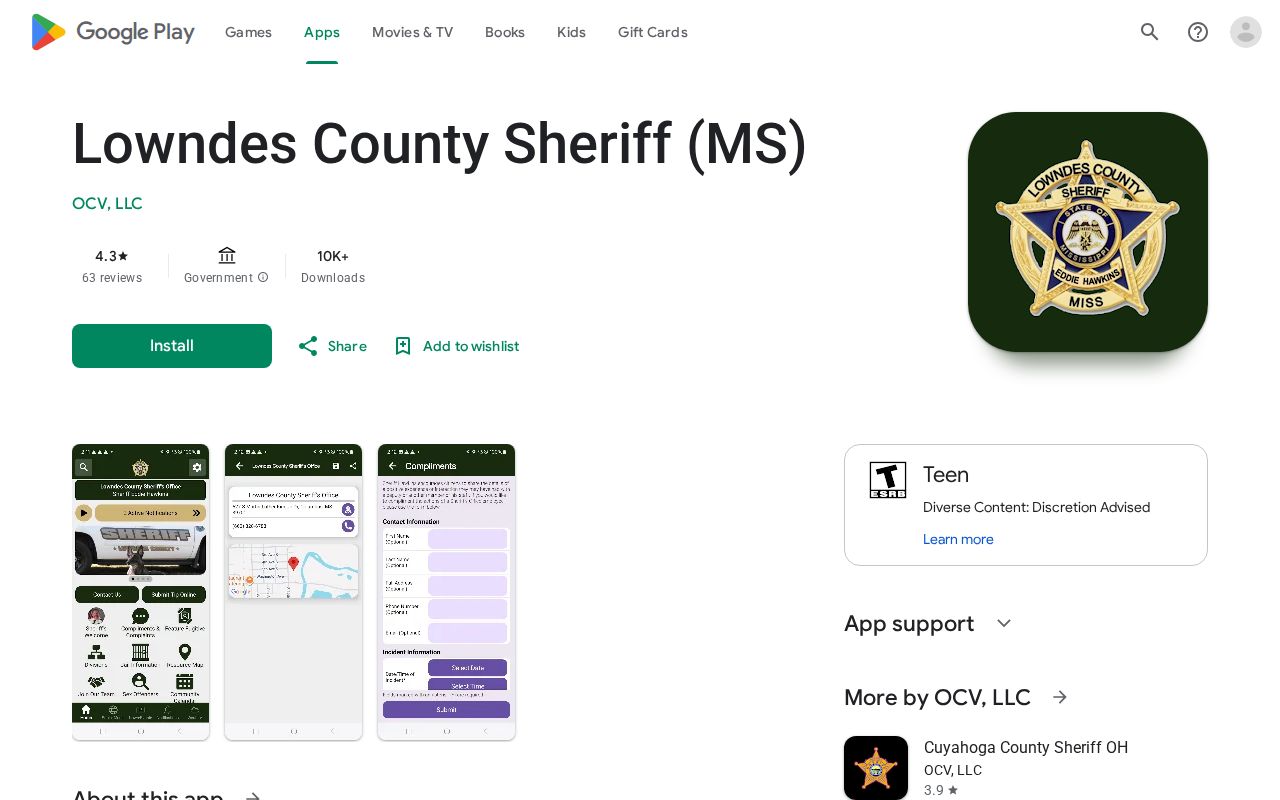
Lowndes County's app listing proves an app channel exists. The county source itself settles any booking or release question. For wider coverage, WLBT publishes selected crime stories. An article may carry an agency-supplied photo. It is never the sheriff's full arrest log. Read the story's date, then chase the linked agency or court record for current status.
MDOC Mugshots and State Custody
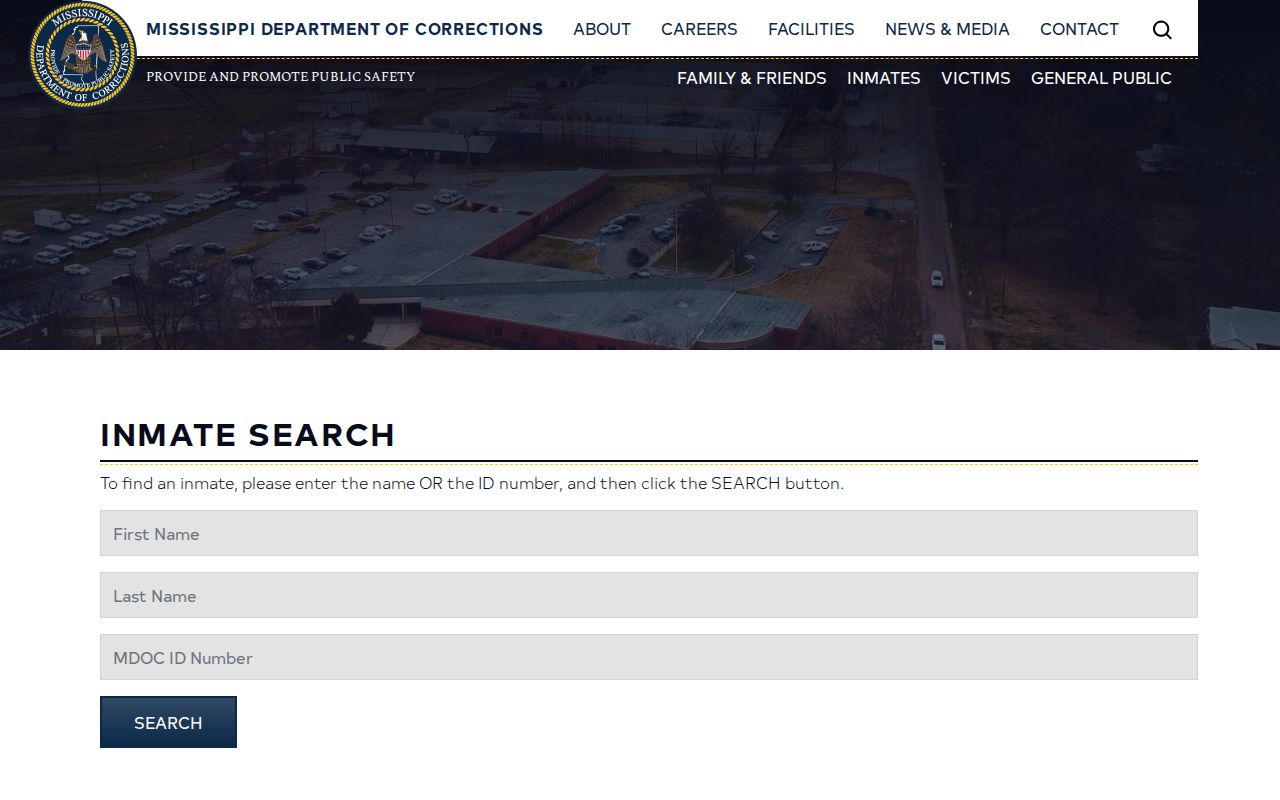
State custody runs through the Mississippi Department of Corrections. Its public Inmate Search takes a first name, last name, or MDOC ID. It can return a profile with an image. The tool covers people in the state corrections system only. It is no substitute for a county jail roster, and a profile picture is not the person's latest arrest photo. The deeper MDOC mugshots page walks through the profile fields and the request path.
MDOC photographs each person at prison intake. Classification runs two weeks to 45 days. The agency sets no schedule for new profile photos and says nothing about how long a released person's result stays up. Treat an old hit as a profile record. Confirm present status with MDOC directly. A county booking photo belongs instead to the local intake event and its local record custodian. The MDOC search form shows the name and ID fields used to pull up a state-prison profile.
For a county booking, go to the sheriff or local jail. For a state prison record, go to MDOC. Custody changes take time to show online, so read any profile search alongside its own date and location fields.
| Custody stage | Best record source | Photo meaning |
|---|---|---|
| Recently arrested or in county jail | Arresting agency and county roster or jail docket. | County booking image, if released under local policy. |
| Released from county custody | Sheriff or jail records unit; released view if available. | Booking record may remain after the name leaves a current roster. |
| Sentenced to state prison | MDOC Inmate Search and MDOC records office. | State corrections profile photo, if shown. |
| Federal or immigration custody | BOP or ICE locator. | Those locators do not provide a public booking-photo gallery. |
Mississippi Wanted Lists and Court Checks
Mississippi DPS keeps an official Most Wanted page with fugitive profiles and photos. Each listing warns the person may be armed or dangerous. That page is a curated wanted notice. It is not a full roster of arrests or county warrants. For a specific warrant, contact the issuing court or local sheriff. Ask how to verify the case safely. A name missing from a wanted page proves nothing about whether a warrant exists.
The DPS page exists for focused public tips. It is not for broad digging through county bookings. Mississippi Crime Stoppers lists 1-888-8CRIMES as the official tip line. Never approach or try to detain a listed person. The Mississippi DPS wanted page keeps its profiles and safety warning with the agency itself.
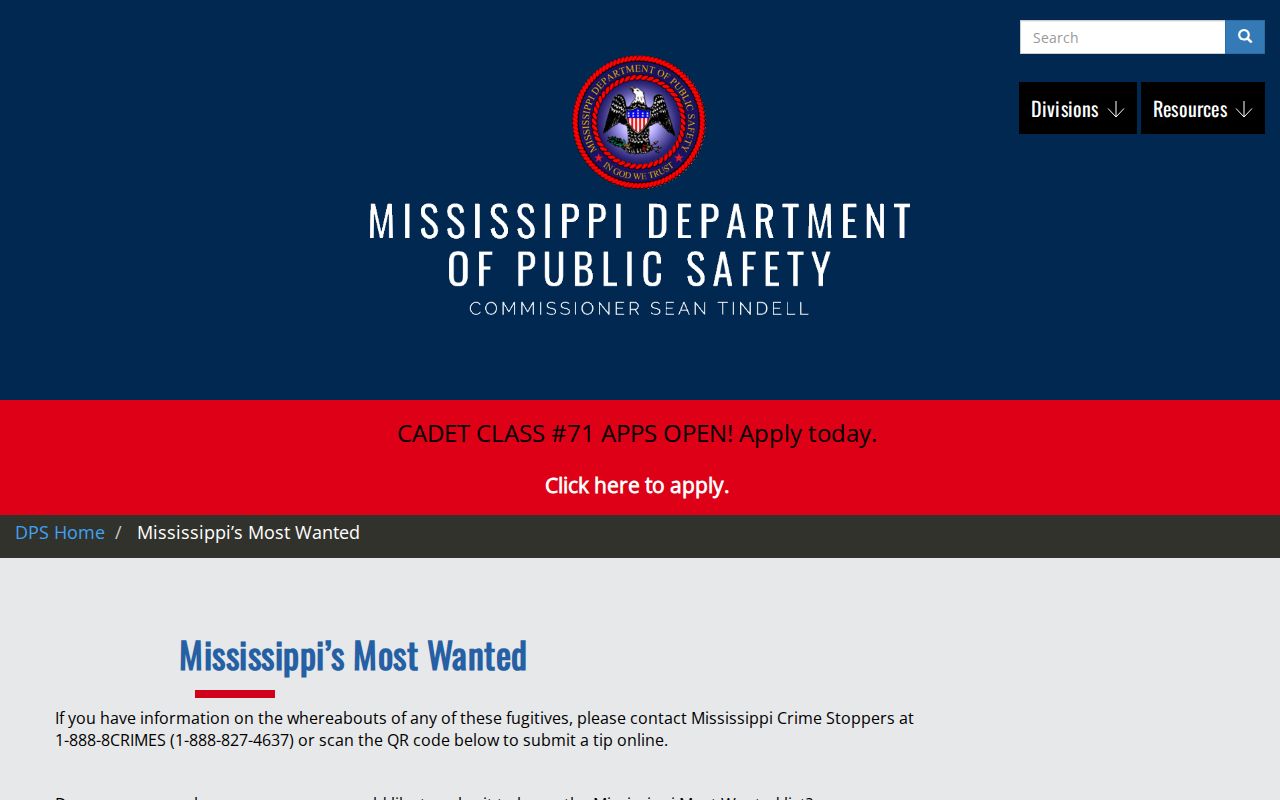
The DPS section heading appears here without any wanted-person portrait. Check a profile on DPS itself for current status and identifying details. MDOC SAVIN/VINE sends alerts for participating county and state events. These include release, transfer, escape, and absconding from supervision. It is a notice service. It is not a booking photo roster or proof of any active warrant. Register through the MDOC SAVIN/VINE service for event alerts. Send tips to law enforcement. Call 911 in a true emergency.
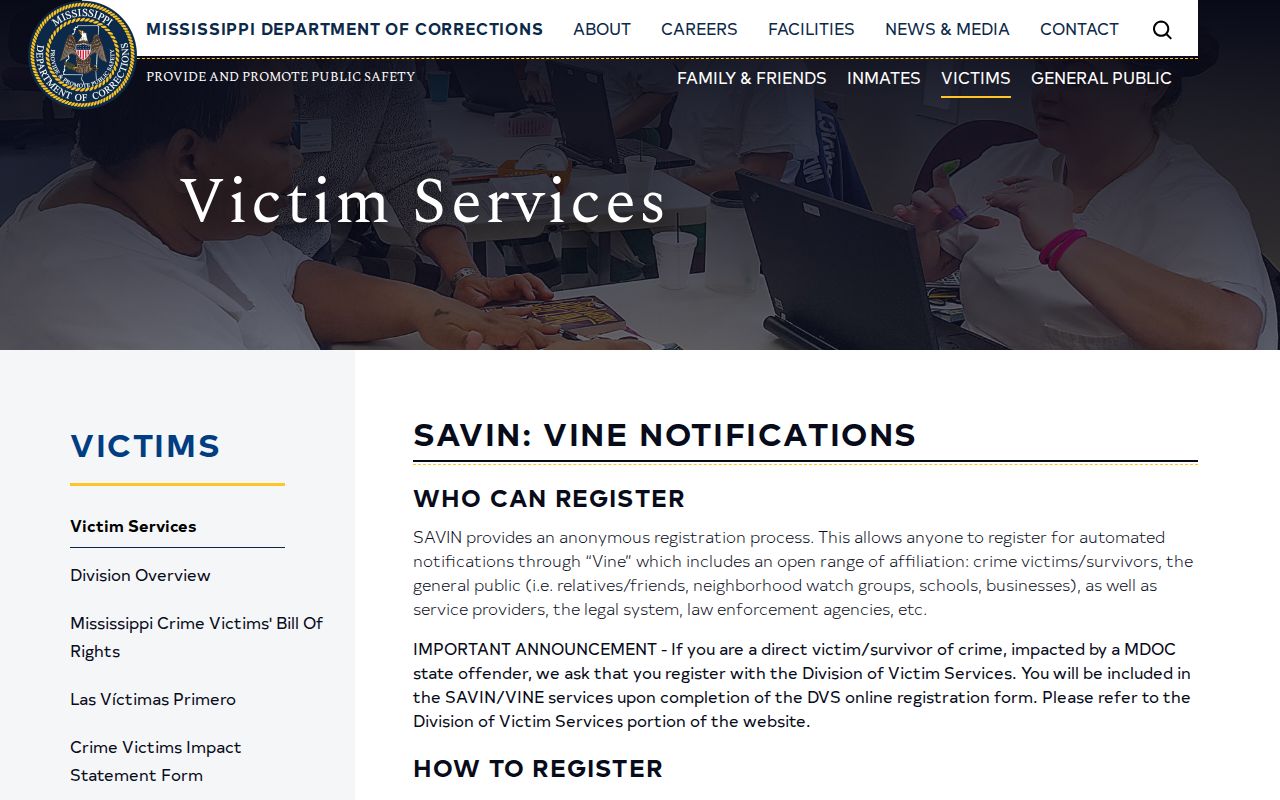
The VINE screen is a safety and status tool. Before drawing any conclusion about custody or legal status, check the county, court, or MDOC record itself.
Mississippi Court and Federal Records
Mississippi's PAMEC system carries electronic case information for participating courts. Public users register first. The official terms list a $10 annual fee plus $0.20 per page for documents. Not every court or record is online. A restricted file may not appear at all. The PAMEC access page opens the statewide system.
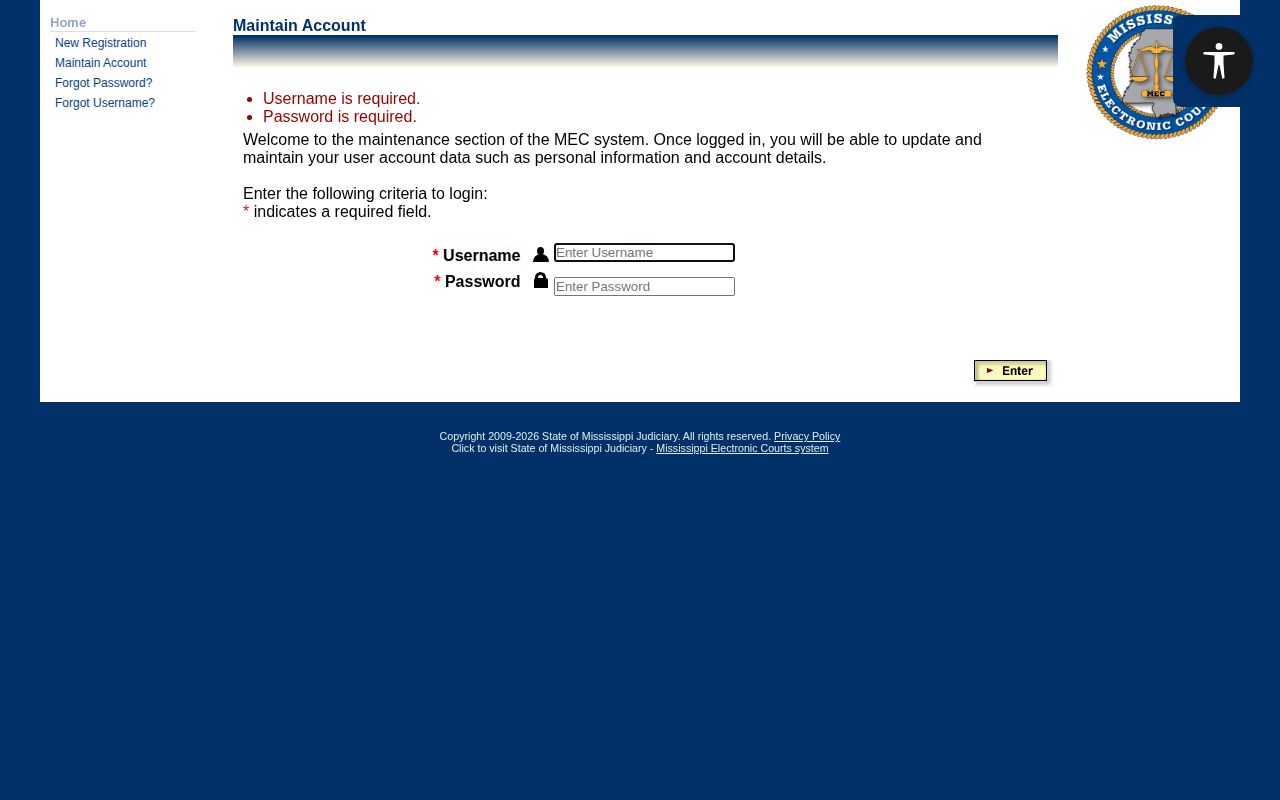
That login screen only opens a door. It never promises that every Mississippi court posts its files online. Some counties sit split across seats or judicial divisions. The agency that made the arrest, the booking custodian, and the court handling the case may operate out of different towns. Harrison, Jones, Bolivar, Tallahatchie, and Yalobusha all work this way. When a file seems missing, ask the clerk directly. Do not assume it does not exist.
For federal cases, the Bureau of Prisons locator tracks federal inmates back to 1982. It offers no public booking-photo gallery. The ICE locator is narrower still. It covers only people currently held by ICE or CBP rather than local arrests. A search there demands an exact nine-digit A-number plus country of birth. A full name works too, but only with both birth country and date of birth. Anyone under 18 cannot be searched through it at all.
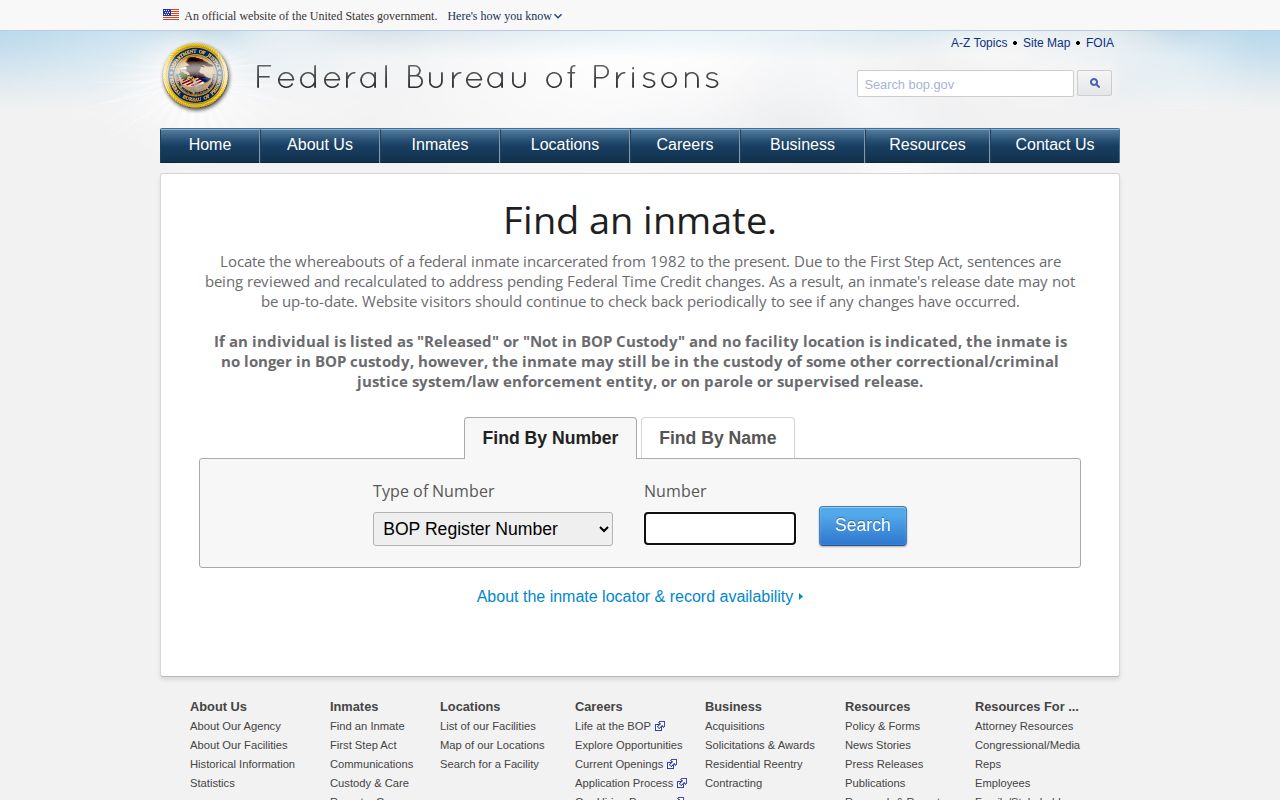
A BOP result can show a person has left federal custody. It cannot prove release from every system. Federal detention, a Mississippi county booking, and immigration custody are three separate status questions.
Mississippi Busted Mugshots Beyond Official Sites
Private sites come last on any search list. Counties, the state, and the courts keep the records that matter. Treat the RecentlyBooked Mississippi page as a starting point only. It groups bookings by county and claims refreshes several times daily. Yet it holds no official custodian role.
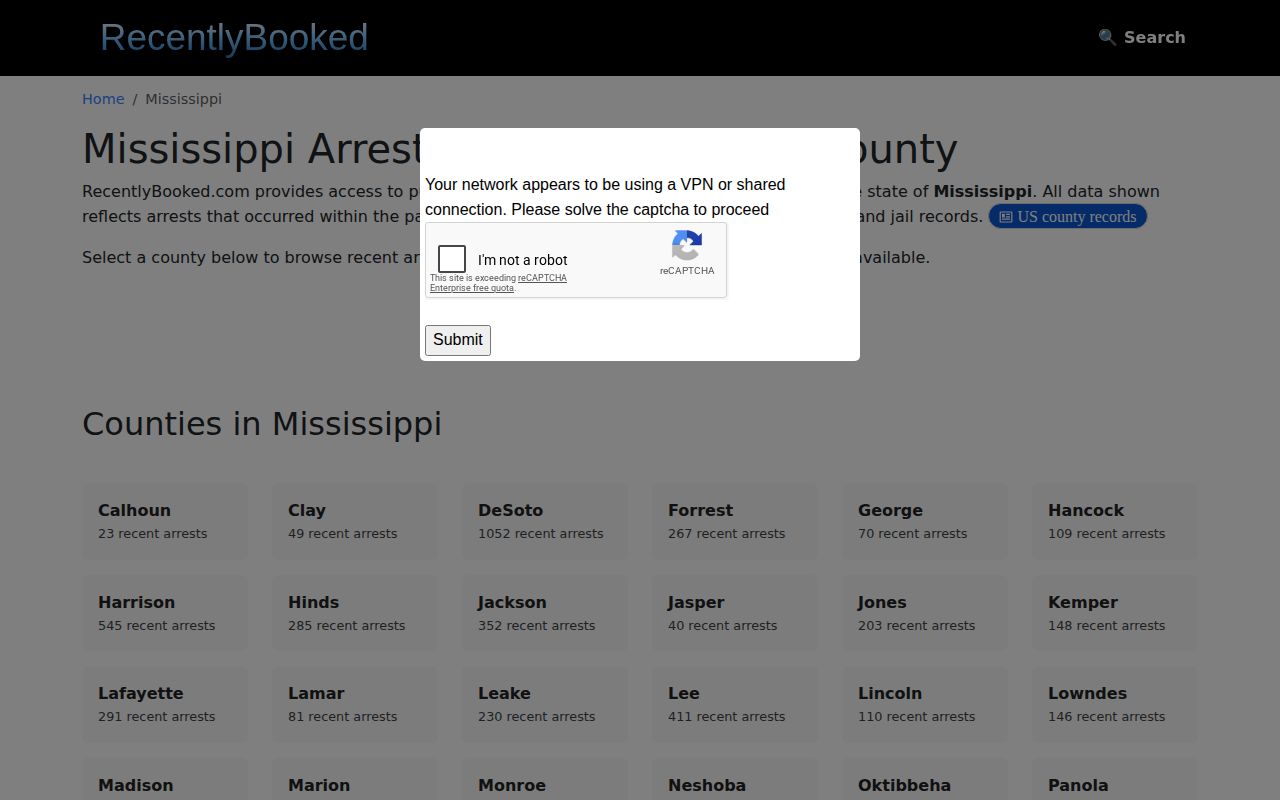
Other publishers run similar Mississippi indexes. The Busted Newspaper landing page lists counties, though that lineup can shift over time. Arrests.org plays in the same unofficial space. So does the county-domain Mugshots.zone page for Tunica. Mugshots.com Mississippi is one more private index, and its state section mainly names the publisher and its menus rather than any official record source. None of them can tell you who is in custody now or how a case ended.
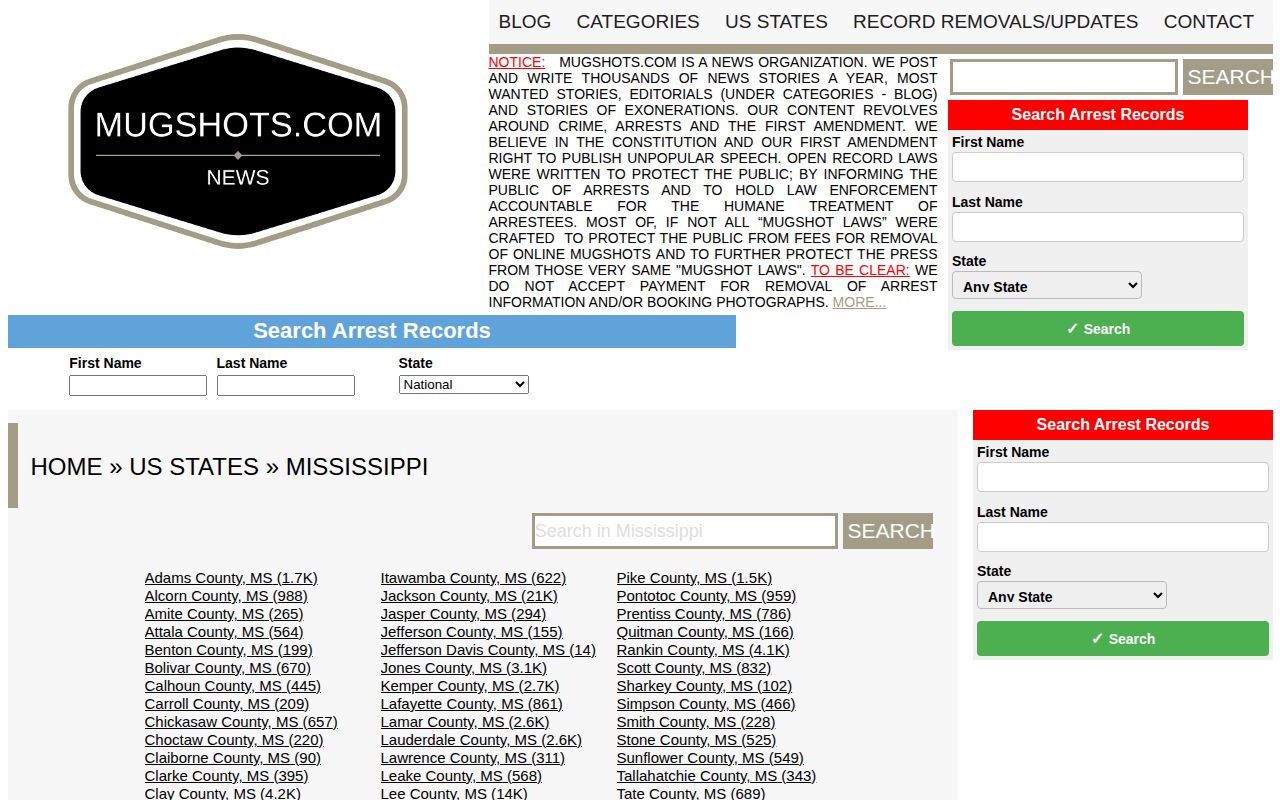
Every publisher sets its own removal rules. Busted Newspaper wants the exact listing plus proof, such as dismissal, acquittal, expungement, or sealing. It quotes five to ten days and lists no fee. RecentlyBooked handles free requests for dismissed, expunged, sealed, wrong-person, juvenile, outdated, duplicate, or simply incorrect entries. You must supply supporting details. Mugshots.com posts free updates for documented court outcomes and maintenance requests. Its policy allows up to ten business days. Arrests.org posts no detailed free policy. Mugshots.zone's county pages make no statewide promise. Start with the official record and the court file. Never pay anyone who guarantees deletion of accurate public information.